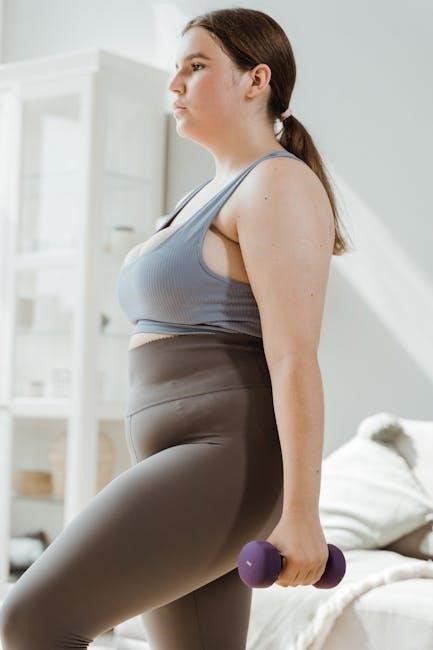



No Equipment Workout Plan: A Comprehensive Guide
Discover a transformative fitness journey with our guide‚ embracing convenience and effectiveness! Explore workouts adaptable for all levels‚ leveraging bodyweight for optimal results.
The modern fitness landscape is undergoing a significant shift‚ moving away from reliance on expensive gym memberships and bulky equipment. This evolution is fueled by a growing desire for accessible‚ convenient‚ and cost-effective workout solutions. Calisthenics‚ the practice of using one’s body weight for exercise‚ is experiencing a remarkable resurgence‚ evidenced by the explosion of interest on social media – the hashtag #calisthenics boasts over 18.5 billion views!

Increasingly‚ individuals are recognizing the power of bodyweight training to deliver substantial results without the constraints of a traditional gym setting. This trend is particularly appealing in today’s fast-paced world‚ where time is precious and travel is frequent. Fitness coaches are highlighting travel-friendly exercises‚ proving that staying active on the go is entirely achievable. The ability to tone up‚ boost energy‚ and improve fitness – all without equipment – is a compelling proposition for many.
Why Choose a No Equipment Workout?
Opting for a no-equipment workout presents a multitude of advantages‚ catering to diverse lifestyles and fitness goals. Primarily‚ it eliminates financial barriers – no gym fees or costly equipment purchases are required‚ making fitness accessible to everyone. Convenience is another key benefit; you can exercise anytime‚ anywhere‚ transforming your home‚ a park‚ or even a hotel room into a personal gym.
Furthermore‚ these workouts are incredibly versatile‚ adaptable to all fitness levels‚ from beginners to advanced athletes. They offer a practical solution for those with busy schedules‚ removing the need to commute to a gym. As highlighted‚ working out doesn’t have to involve hours at the gym. Ultimately‚ a no-equipment approach empowers you to take control of your fitness journey‚ fostering consistency and sustainable healthy habits.
Benefits of Calisthenics
Calisthenics‚ the foundation of many no-equipment workouts‚ delivers a remarkable range of benefits beyond simple fitness. It significantly enhances functional strength‚ improving everyday movements like lifting‚ bending‚ and walking. Moreover‚ calisthenics cultivates exceptional body control and coordination‚ boosting athletic performance and reducing injury risk.
The focus on bodyweight builds lean muscle mass and improves cardiovascular health simultaneously‚ contributing to efficient fat burning. Interestingly‚ calisthenics has experienced a recent surge in popularity‚ amassing billions of views on social media‚ demonstrating its growing appeal. It’s a testament to its effectiveness and accessibility; Ultimately‚ embracing calisthenics fosters a deeper connection with your body‚ promoting mindful movement and overall well-being‚ proving workouts don’t require expensive equipment.
Understanding Bodyweight Training Principles
Effective bodyweight training hinges on understanding key principles. Progressive overload is crucial – gradually increasing the difficulty by modifying exercises‚ adding repetitions‚ or decreasing rest. Leverage different angles and tempos to challenge muscles in new ways‚ preventing plateaus. Mastering proper form is paramount; prioritize quality over quantity to avoid injuries and maximize results.
Bodyweight exercises inherently demand core engagement for stability‚ strengthening this vital muscle group. Remember‚ consistency is key; regular workouts yield sustainable improvements. This approach offers a convenient‚ cost-effective alternative to gym memberships‚ allowing fitness to seamlessly integrate into a busy lifestyle. Ultimately‚ bodyweight training empowers you to build strength‚ endurance‚ and flexibility anywhere‚ anytime‚ proving fitness is accessible to all.

Warm-Up Routine (5-10 Minutes)
Prepare your body for exercise with a dynamic warm-up! Increase blood flow and flexibility‚ reducing injury risk and enhancing performance for optimal results.
Dynamic Stretching for Injury Prevention
Prioritize injury prevention with dynamic stretches‚ movements that prepare muscles for activity. Unlike static stretching‚ which involves holding a position‚ dynamic stretches involve controlled movements through a full range of motion. Examples include arm circles‚ leg swings‚ torso twists‚ and walking lunges with a twist.
Focus on movements that mimic the exercises in your workout‚ gradually increasing your range of motion. This increases blood flow to muscles‚ improves flexibility‚ and enhances neuromuscular coordination. Performing dynamic stretches before exercise can significantly reduce the risk of strains‚ sprains‚ and other injuries. Remember to perform each stretch with control‚ avoiding bouncing or jerky movements. Aim for 10-15 repetitions of each stretch‚ focusing on proper form and controlled execution. Integrating dynamic stretching into your routine is a proactive step towards a safer and more effective workout experience.
Cardio Warm-Up: Jumping Jacks & High Knees
Elevate your heart rate and prepare your cardiovascular system with a quick cardio warm-up. Incorporate classic exercises like jumping jacks and high knees to increase blood flow and oxygen delivery to your muscles. Start with 30-60 seconds of jumping jacks‚ focusing on maintaining a steady pace and controlled movements.
Follow this with 30-60 seconds of high knees‚ bringing your knees as close to your chest as possible while maintaining good posture. These exercises not only warm up your muscles but also improve coordination and agility. Remember to breathe deeply throughout the warm-up‚ and adjust the intensity based on your fitness level. A proper cardio warm-up is crucial for optimizing performance and reducing the risk of injury during your workout. Consider adding other light cardio movements like butt kicks or quick feet for variety.
The Workout Plan: Full Body Focus
Engage in a comprehensive routine targeting all major muscle groups! Maximize your fitness with exercises designed for strength‚ endurance‚ and overall well-being.
Lower Body Exercises
Strengthen and tone your legs and glutes with our effective lower body routine. Focus on proper form to maximize results and prevent injuries. Begin with Squats‚ a foundational exercise – master variations like standard‚ jump‚ and pulse squats for increased intensity.
Next‚ incorporate Lunges‚ working each leg independently. Explore forward‚ reverse‚ and lateral lunges to target different muscle fibers. Don’t forget Calf Raises‚ crucial for strengthening lower legs and improving ankle stability. Perform these exercises in sets of 10-15 repetitions‚ adjusting based on your fitness level.
Remember to maintain a controlled pace and engage your core throughout each movement. Prioritize quality over quantity‚ ensuring each repetition is executed with precision. Consistency is key to achieving noticeable improvements in strength and endurance.
Squats: Variations & Proper Form
Mastering the squat is fundamental for lower body strength. Begin with feet shoulder-width apart‚ toes slightly outward. Lower your hips as if sitting in a chair‚ keeping your back straight and core engaged. Ensure your knees track over your toes‚ avoiding inward collapse.
Explore variations: Standard Squats build a base; Jump Squats add explosive power; Pulse Squats increase endurance. Modify depth based on your flexibility – aim for thighs parallel to the ground. Focus on controlled movements‚ avoiding rushing.
Common mistakes include rounding the back and letting knees cave in. Prioritize proper form over speed or depth. Perform 3 sets of 10-15 repetitions‚ resting 60 seconds between sets. Listen to your body and adjust as needed.
Lunges: Forward‚ Reverse & Lateral
Lunges are excellent for unilateral leg strength and balance. Start with feet hip-width apart. For Forward Lunges‚ step forward with one leg‚ lowering your hips until both knees are bent at 90 degrees. Keep your front knee over your ankle and your back knee close to the ground.
Reverse Lunges involve stepping backward‚ offering a gentler variation. Lateral Lunges target inner and outer thighs – step to the side‚ bending one knee while keeping the other leg straight. Maintain a straight back and engaged core throughout each lunge.
Perform 3 sets of 10-12 repetitions per leg for each variation. Focus on controlled movements and proper form. Alternate legs with each repetition. Adjust the distance of your step to modify the intensity.
Calf Raises: Strengthening Lower Legs
Calf raises are a simple yet effective exercise for strengthening the gastrocnemius and soleus muscles in your lower legs. Stand with your feet flat on the floor‚ hip-width apart. Slowly rise up onto your toes‚ squeezing your calf muscles at the top of the movement.
Hold this position for a second‚ then slowly lower your heels back to the ground. For increased difficulty‚ perform calf raises on a slightly elevated surface‚ like a step. Maintain a stable core and avoid rolling your ankles.
Aim for 3 sets of 15-20 repetitions. Variations include single-leg calf raises for an added challenge. Consistent calf raises improve ankle stability and contribute to overall lower body strength and power.
Upper Body Exercises
Strengthen and tone your upper body with these effective‚ equipment-free exercises. Focus on proper form to maximize results and prevent injury. Push-ups are a cornerstone‚ offering variations for all fitness levels – from wall push-ups for beginners to decline push-ups for advanced individuals.
Tricep dips‚ utilizing a stable chair or surface‚ effectively target the back of your arms. Pike push-ups‚ resembling an inverted V-shape‚ emphasize shoulder strength and stability. Remember to engage your core throughout each exercise for enhanced stability and power.
Perform 3 sets of 8-12 repetitions for each exercise‚ adjusting based on your fitness level. Prioritize controlled movements over speed to ensure proper technique and maximize muscle engagement.
Push-Ups: Modifications for All Levels
Mastering the push-up is fundamental‚ but accessibility is key! Beginners can start with wall push-ups‚ reducing the resistance and focusing on form. Knee push-ups offer another modification‚ decreasing the bodyweight load while still engaging core muscles.
Intermediate fitness levels can progress to standard push-ups‚ maintaining a straight line from head to heels. Advanced individuals can explore variations like decline push-ups (feet elevated) for increased difficulty‚ or diamond push-ups to target the triceps more intensely.
Focus on controlled descent and explosive ascent. Maintain a braced core and avoid sagging hips. Aim for 3 sets of as many repetitions as possible (AMRAP) with good form.
Tricep Dips (Using a Chair or Stable Surface)
Target your triceps effectively with chair dips‚ a fantastic bodyweight exercise! Position yourself with your back facing a sturdy chair or bench‚ hands shoulder-width apart gripping the edge. Extend your legs out in front of you‚ heels on the floor.
Lower your body by bending your elbows‚ keeping them pointing backwards. Descend until your upper arms are parallel to the floor. Push back up to the starting position‚ fully extending your arms.
Modify the difficulty by bending your knees for easier execution or extending your legs further for a greater challenge. Perform 3 sets of 10-15 repetitions‚ focusing on controlled movements and engaging your triceps throughout the exercise.
Pike Push-Ups: Targeting Shoulders
Elevate your shoulder workout with pike push-ups‚ a challenging variation of the standard push-up! Assume a push-up position‚ then lift your hips upwards‚ forming an inverted V-shape with your body. Keep your back straight and core engaged throughout the movement.
Lower your head towards the floor by bending your elbows‚ maintaining the V-shape. Focus on driving your elbows outwards‚ emphasizing shoulder activation. Push back up to the starting position‚ fully extending your arms.
Adjust the intensity by altering the angle of your hips – a steeper angle increases difficulty. Complete 3 sets of 8-12 repetitions‚ prioritizing proper form to maximize shoulder engagement and prevent injury.
Core Exercises
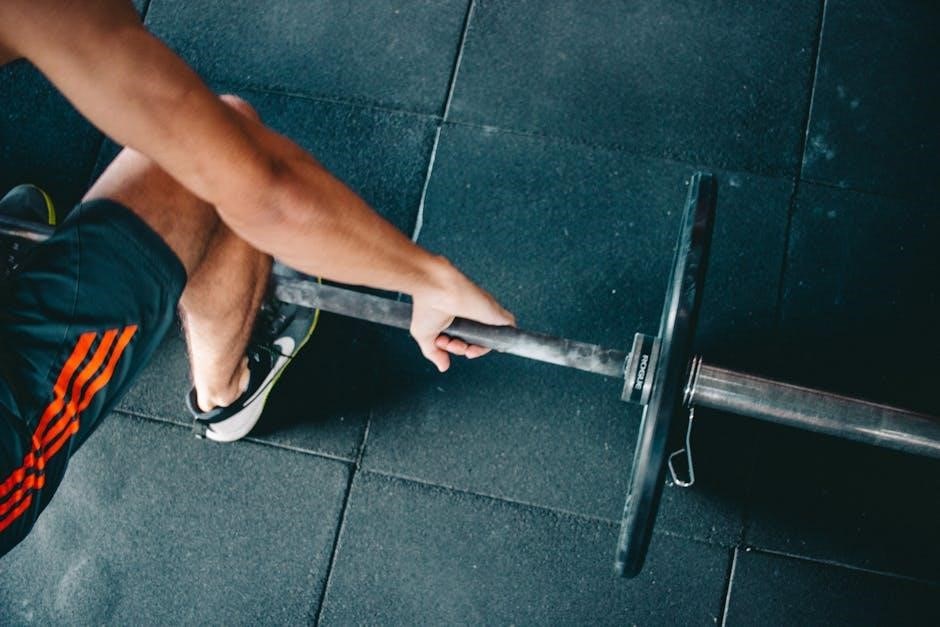
Strengthen your foundation with our targeted core exercises‚ essential for stability and overall fitness! A strong core enhances posture‚ improves balance‚ and boosts athletic performance. These exercises require no equipment‚ making them perfect for home workouts or travel.
We’ll focus on engaging all core muscles – rectus abdominis‚ obliques‚ and transverse abdominis. Expect variations of planks‚ crunches‚ and twists‚ designed to challenge your core from multiple angles. Remember to maintain proper form throughout each exercise to prevent injury and maximize effectiveness.
Prioritize controlled movements and mindful breathing. Consistent core work will lead to a stronger‚ more resilient physique‚ improving your daily life and fitness endeavors.
Plank: Variations & Holding Techniques
Master the plank‚ a foundational exercise for core strength and stability! Begin with the standard plank – forearms on the ground‚ body in a straight line from head to heels. Engage your core‚ glutes‚ and quads to maintain proper form. Avoid sagging hips or a rounded back.
Progress with variations like side planks‚ targeting obliques‚ and plank jacks‚ adding a cardio element. For an increased challenge‚ try forearm plank taps‚ alternating reaching one hand forward. Focus on holding each plank for 30-60 seconds‚ gradually increasing duration as you gain strength.
Remember to breathe deeply throughout the exercise. Proper technique is crucial; prioritize form over holding time. Consistent plank practice builds a strong‚ resilient core.
Crunches: Effective Abdominal Work
Target your abdominal muscles with effective crunch variations! Start by lying on your back with knees bent and feet flat on the floor. Place your hands lightly behind your head‚ supporting your neck. Engage your core and lift your upper body towards your knees‚ focusing on contracting your abs.
Avoid pulling on your neck; the movement should come from your abdominal muscles. Explore variations like bicycle crunches‚ twisting your torso to bring your elbow to the opposite knee. Consider reverse crunches‚ lifting your hips off the floor. Aim for 15-20 repetitions per set.
Remember to breathe consistently throughout the exercise. Proper form is key to maximizing results and preventing injury. Consistent crunch practice strengthens your core and improves posture.
Russian Twists: Engaging Obliques
Strengthen your obliques and core with dynamic Russian twists! Begin by sitting on the floor with your knees bent and feet slightly elevated. Lean back slightly‚ maintaining a straight spine. Hold your hands together in front of your chest‚ or clasp them for added resistance.
Twist your torso from side to side‚ bringing your hands towards the floor on each side. Focus on engaging your obliques throughout the movement. Maintain control and avoid jerky motions. Increase the challenge by holding a light weight‚ like a water bottle.
Perform 15-20 repetitions on each side. Remember to breathe deeply and maintain proper form. Consistent Russian twists enhance core stability and rotational power.
Cool-Down & Stretching (5-10 Minutes)
Prioritize recovery with gentle stretches! Reduce muscle soreness and enhance flexibility through static holds‚ promoting long-term fitness gains and preventing injury.
Static Stretching for Muscle Recovery
Following your no-equipment workout‚ dedicate 5-10 minutes to static stretching. This crucial phase aids muscle recovery‚ reduces soreness‚ and improves overall flexibility. Unlike dynamic stretching‚ static stretches involve holding a stretch in a challenging‚ yet comfortable‚ position for 20-30 seconds.
Focus on major muscle groups worked during your session. Examples include hamstring stretches (sitting or standing)‚ quadriceps stretches (holding your foot towards your glutes)‚ calf stretches (leaning against a wall)‚ triceps stretches (reaching one arm overhead and bending at the elbow)‚ and shoulder stretches (crossing one arm across your body).
Remember to breathe deeply and consistently throughout each stretch. Avoid bouncing or forcing the stretch‚ as this can lead to injury. Static stretching helps lengthen muscles‚ improve range of motion‚ and prepare your body for the next workout session. Consistent static stretching is key to long-term fitness success!
Importance of Post-Workout Flexibility
Prioritizing flexibility after your no-equipment workout is paramount for sustained progress and injury prevention. Post-workout flexibility isn’t merely about touching your toes; it’s about restoring muscles to their optimal length and function. Reduced flexibility can limit your range of motion‚ hindering performance and increasing the risk of strains or tears.
Regular stretching improves blood flow to muscles‚ delivering vital nutrients and removing metabolic waste products. This accelerates recovery and reduces muscle soreness. Enhanced flexibility also contributes to better posture and body awareness‚ improving overall movement efficiency.
Integrating a dedicated cool-down and stretching routine demonstrates commitment to your body’s well-being. Consistent attention to flexibility will unlock greater athletic potential and promote a healthier‚ more resilient physique. Don’t underestimate the power of a flexible body!
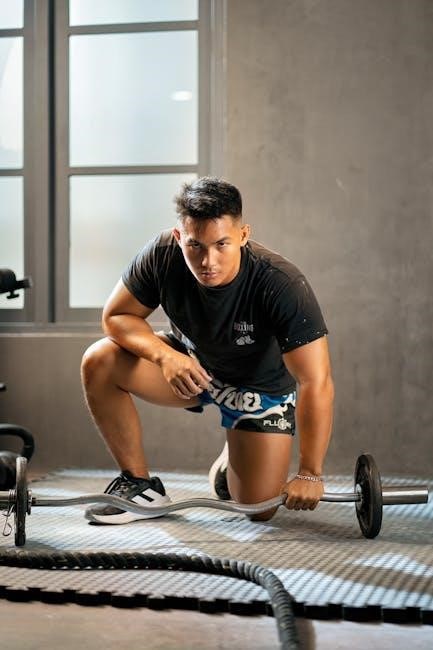
Workout Schedule & Progression
Begin with a beginner routine‚ gradually increasing intensity and complexity. Progress to intermediate and advanced levels‚ adjusting frequency based on recovery and fitness goals.
Beginner‚ Intermediate & Advanced Levels
For beginners‚ focus on mastering fundamental movements with proper form. Start with three workouts per week‚ allowing for ample rest and recovery between sessions. Each workout should consist of 2-3 sets of 8-12 repetitions for each exercise. Prioritize consistency over intensity‚ building a solid foundation of strength and endurance.
As you progress to the intermediate level‚ increase the volume and intensity of your workouts. Incorporate more challenging variations of exercises‚ such as incline push-ups or pistol squats. Aim for four workouts per week‚ with 3-4 sets of 10-15 repetitions. Introduce supersets and circuit training to enhance cardiovascular fitness and calorie burn.
Advanced practitioners can push their limits with complex movements and high-intensity training. Explore advanced calisthenics skills like handstands and muscle-ups. Implement five to six workouts per week‚ incorporating plyometrics and dynamic exercises. Focus on maximizing strength‚ power‚ and muscular endurance‚ continually challenging your body to adapt and improve.
Frequency & Rest Days
Optimal frequency for a no-equipment workout plan depends on your fitness level and recovery capacity. Beginners should aim for 3-4 workouts per week‚ allowing for at least one full rest day between sessions. This allows muscles to repair and rebuild‚ preventing overtraining and injury.
Intermediate individuals can increase frequency to 4-5 workouts weekly‚ potentially incorporating active recovery days like yoga or light cardio. Listen to your body; if you experience persistent soreness‚ prioritize rest.
Advanced athletes might train 5-6 times per week‚ strategically scheduling deload weeks every 4-6 weeks to reduce volume and intensity. Rest days are crucial for muscle protein synthesis and preventing plateaus. Prioritize 7-9 hours of sleep and adequate nutrition to support recovery and maximize results.
Leave a Reply
You must be logged in to post a comment.